Custom 3D props that turn events into shareable moments
How can you promote your brand at an event in a way that makes the adverts happen “all on its own”? It really is possible — with the right 3D signs or props. For example, competition for visitors’ attention at a trade show can be fierce if there are, say, a hundred booths in the hall. Now imagine one of them flanked by a ten-foot illuminated arch, a giant brand monogram in the center, and a long line of people waiting to snap a photo in front of it. Naturally, the owners of such a booth can expect a flood of social media posts tagged by enthusiastic users.
Custom 3D props and architectural signs have quietly become one of the most cost-effective tools in event marketing. They create what no banner stand ever could: a physical reason to stop, engage, and — critically — post about it. We’ll take a detailed look at why these installations work, how they’re built, and what to look for when ordering them.
Why visual moments are now the currency of event marketing
Events have always been about experiences. But with the rise of Instagram and TikTok and the normalization of short-form video, they’ve taken on a new role: content factories. Nearly 70% of event attendees capture and share content on-site. That stat alone should change how you think about event decor fabrication.
A static banner gets noticed once. But a well-placed custom 3D prop gets photographed hundreds of times — by real people, posted to their real networks, carrying your brand into feeds you could never buy access to. The marketing term for this is earned media. The practical translation is: a single installation can work like a paid campaign, with the difference that it keeps running after the event ends.
The ROI of a shareable photo op
Now for a bit of fun math. An average Instagram user has 150-500 followers. If 200 people photograph your 3D custom prop and post it, that’s potentially 100,000 impressions from a single installation — none of it paid, all of it contextualized in a moment of genuine enjoyment. Add a branded hashtag to the display, and you can track every single post.
Brands that understand this shift design their event decor backwards: they start with “what will people want to photograph” and build outward from there. Thus, a 3D sign that was originally just decoration added at the end becomes the centerpiece of the entire event layout.
What makes custom 3D props actually shareable
Not every large-format installation earns a second glance. Effective custom signage for commercial events is designed with the phone camera in mind from the start. There’s a whole list of details and techniques that give the set an “Instagram-worthy” look, attract attention, and encourage people to take photos.
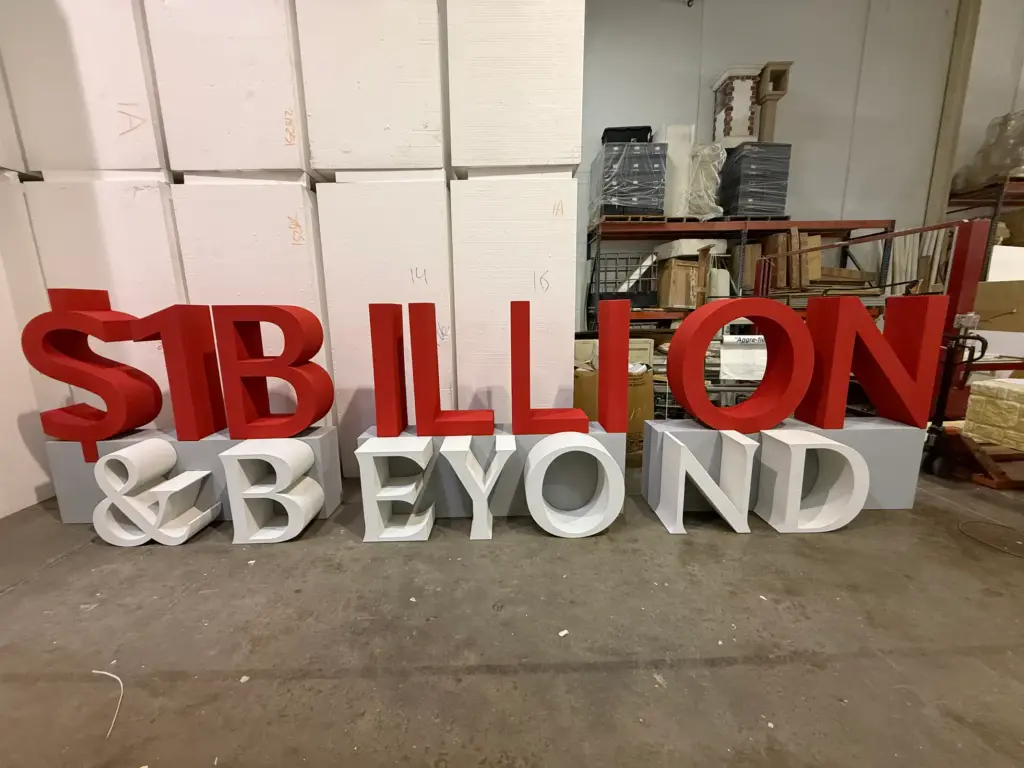
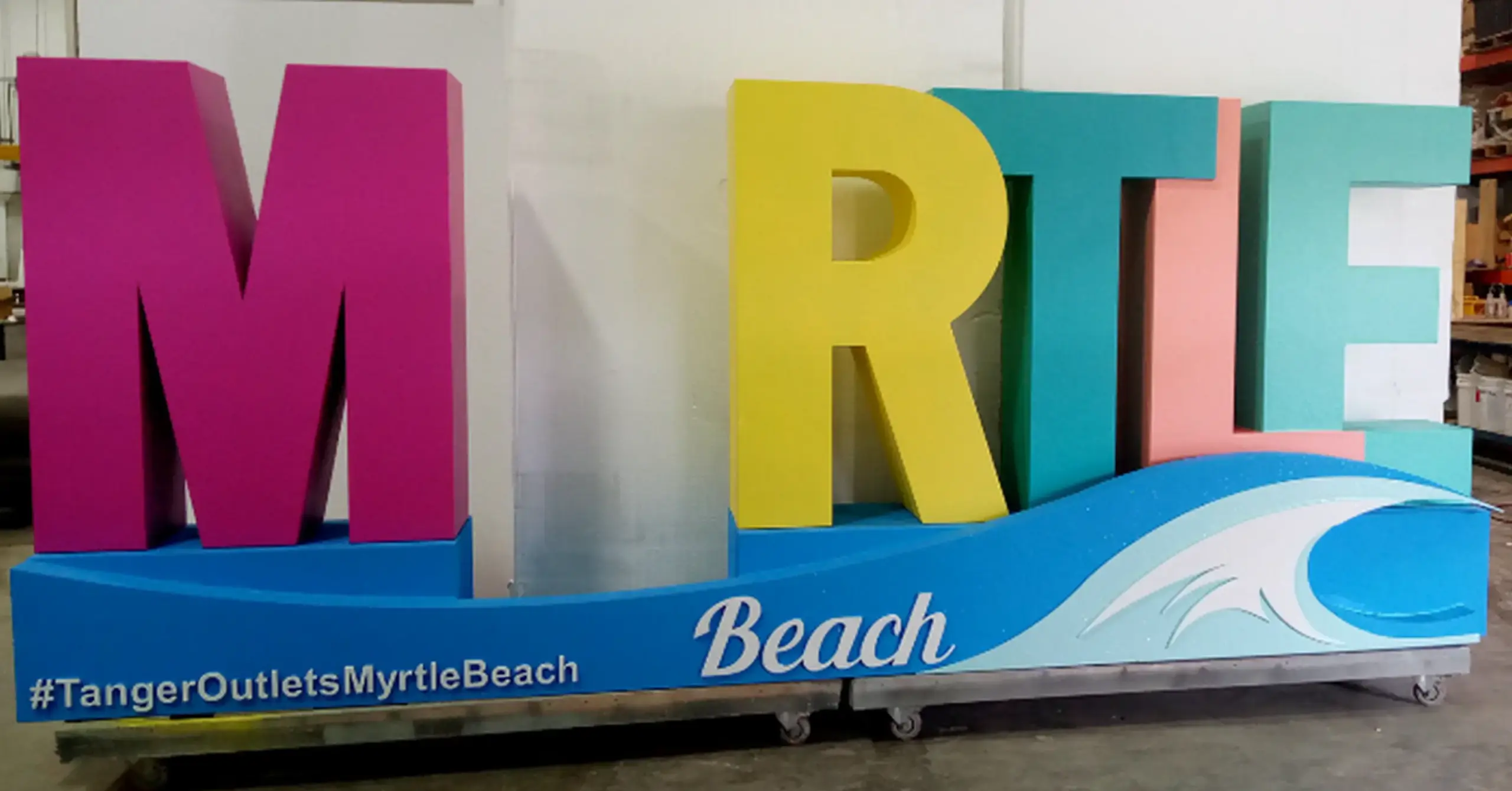
- Large size. People most often choose large-scale objects for photo sessions. First of all, huge figures, letters, or logos are clearly visible in crowded areas. Second, the difference in size between them and the person being photographed creates a fun effect. For example, a 6-foot-tall word with the letter Y intentionally omitted was used for a photo zone at Myrtle Beach in South Carolina. The idea is that a person standing in that gap, with their arms raised, will mimic the missing letter.
- Bright colors. In addition to aligning with the social media trend of “dopamine colors,” this palette naturally draws the camera’s lens. It could be a richly colored backdrop or a set of monochromatic neon letters.
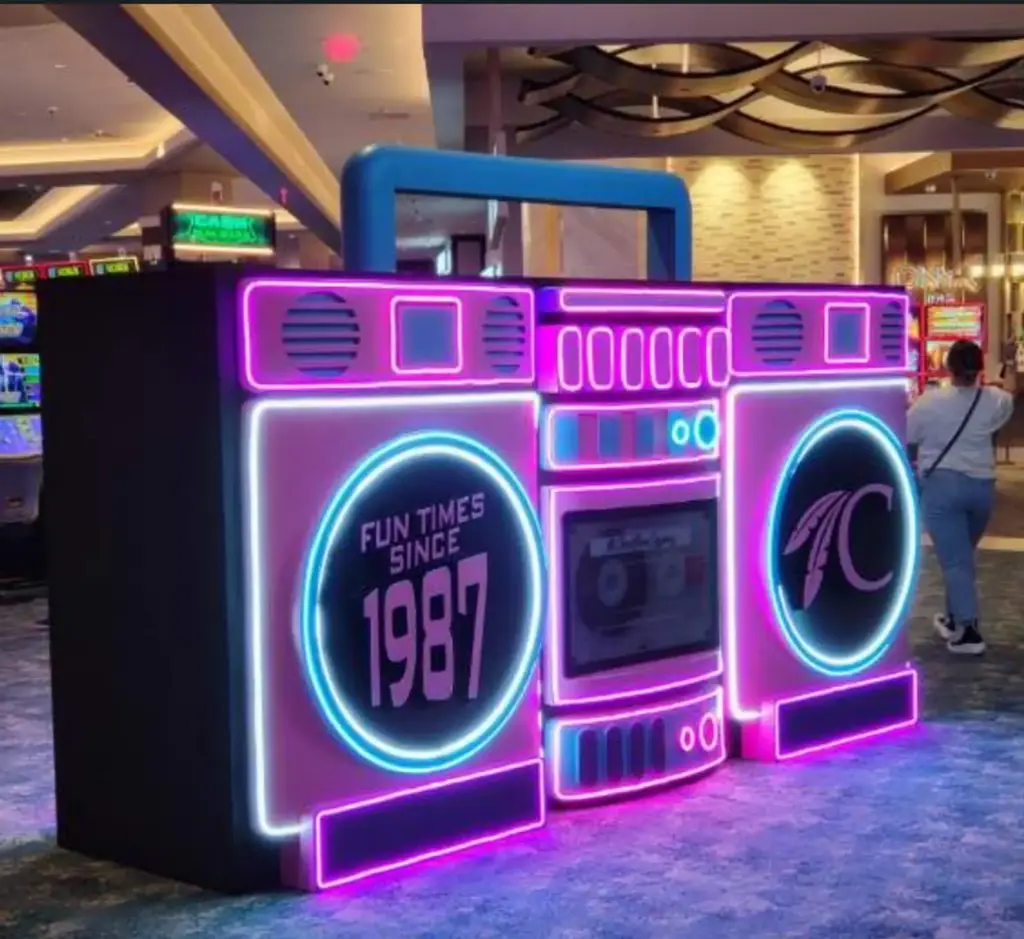
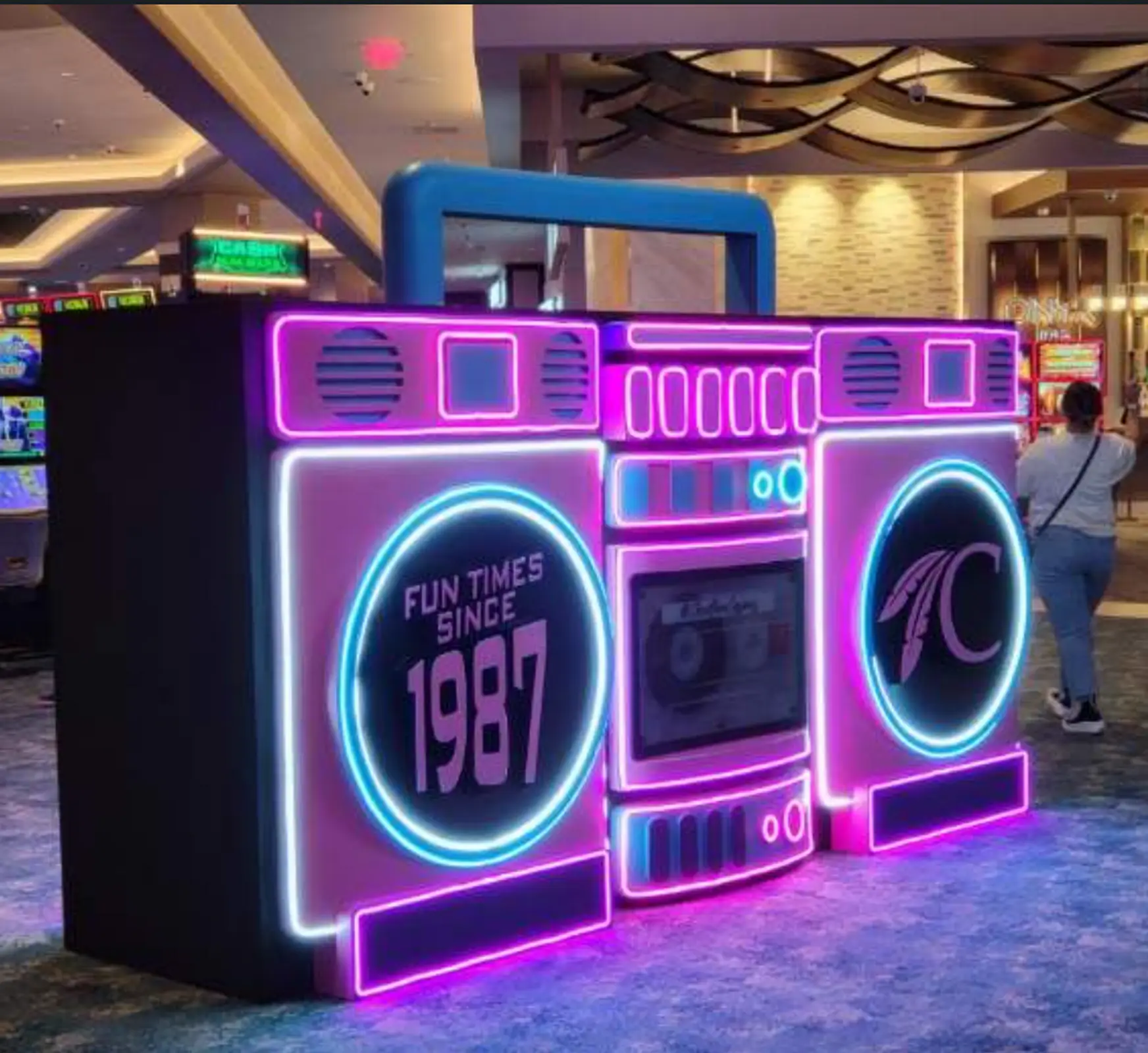
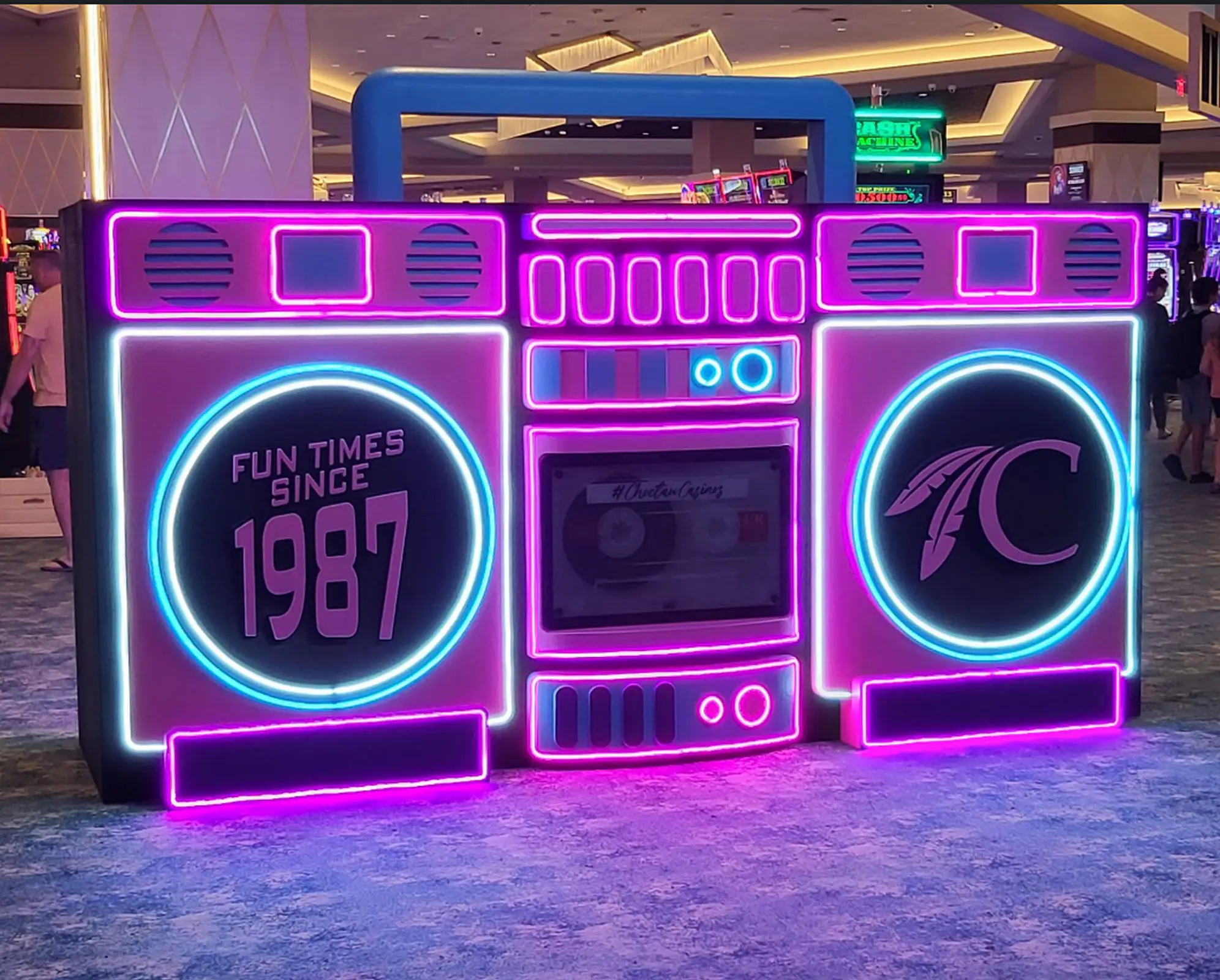
- Interactive elements. People are much more likely to take photos with props they can interact with: pick them up, lean on them, or climb on top of them (for example, a witch’s broom or a giant cassette player).
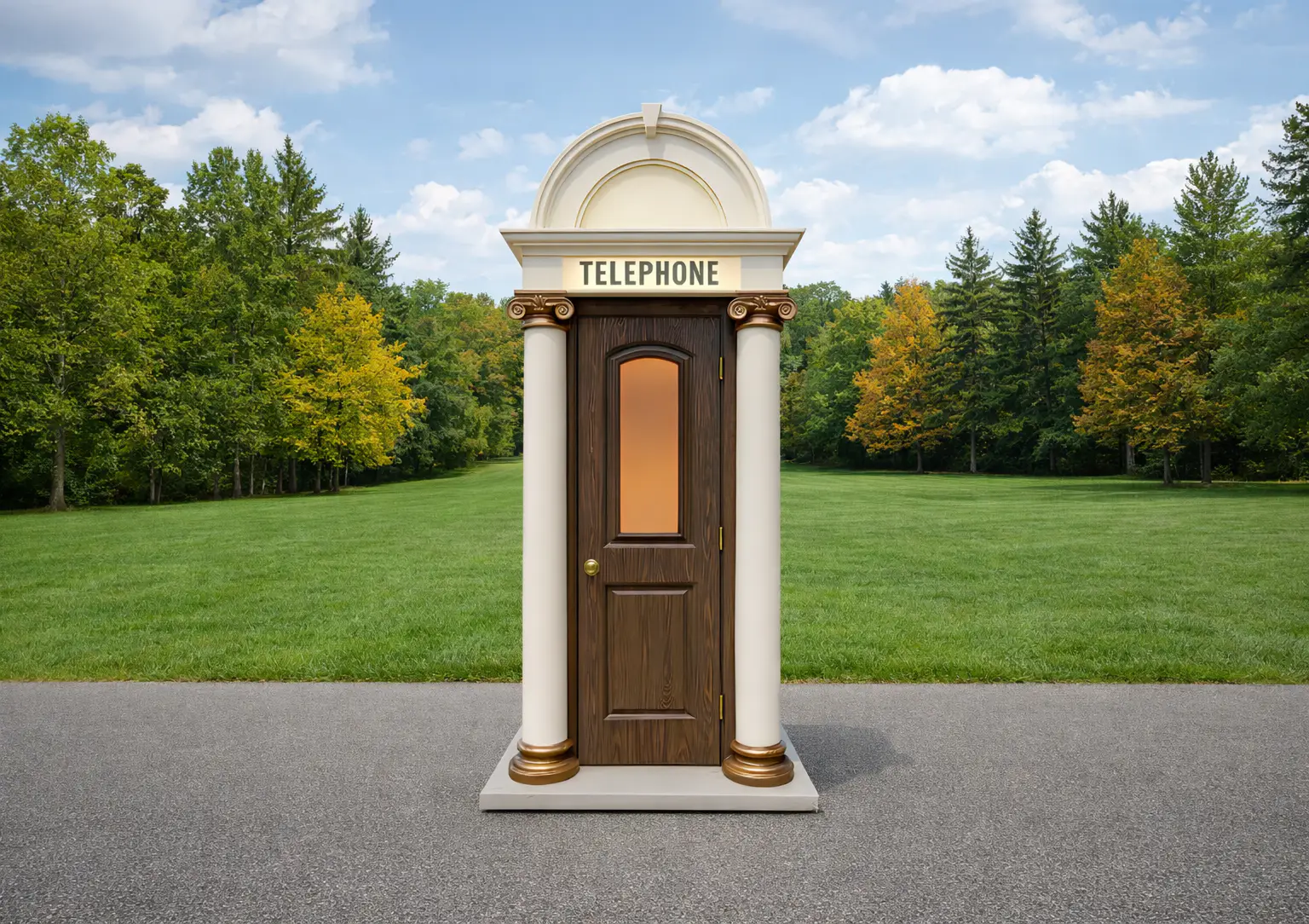
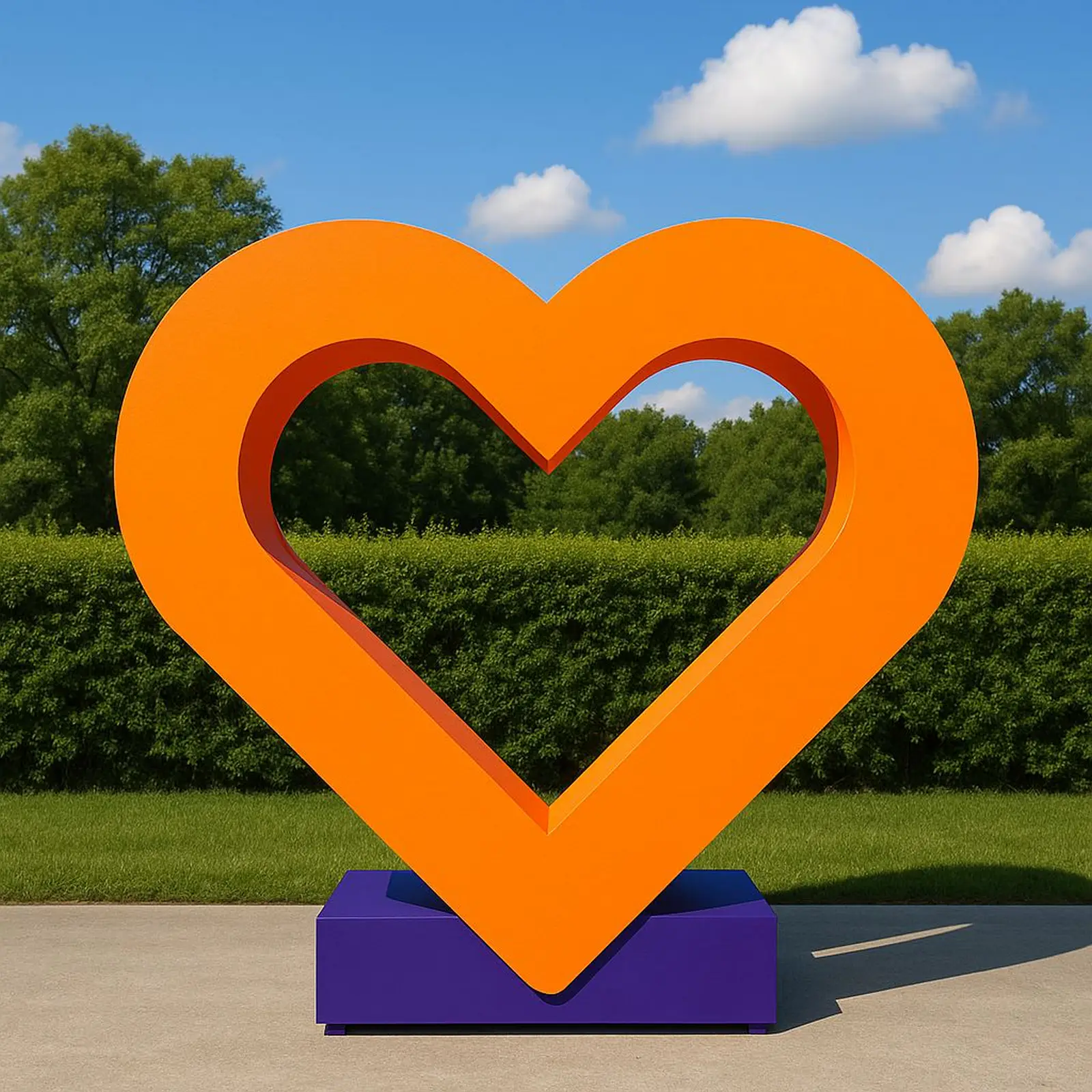
- Built-in photo frames or backdrops. These could be outlines of Polaroid photos or frames like those on museum paintings. Here, essentially, the props themselves suggest how to pose. For companies looking to create branded moments, an arch with the company logo is ideal. Every photo taken through this arch is automatically composed: the brand is positioned at the top or on the sides, while the person stands inside.
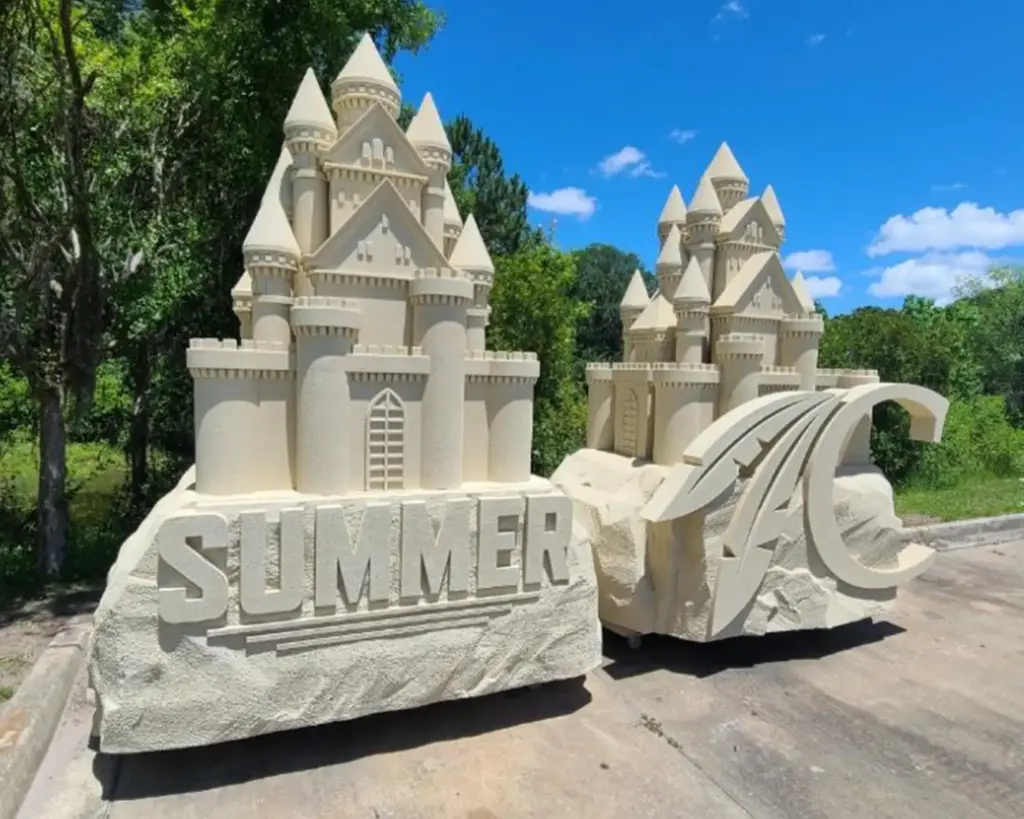
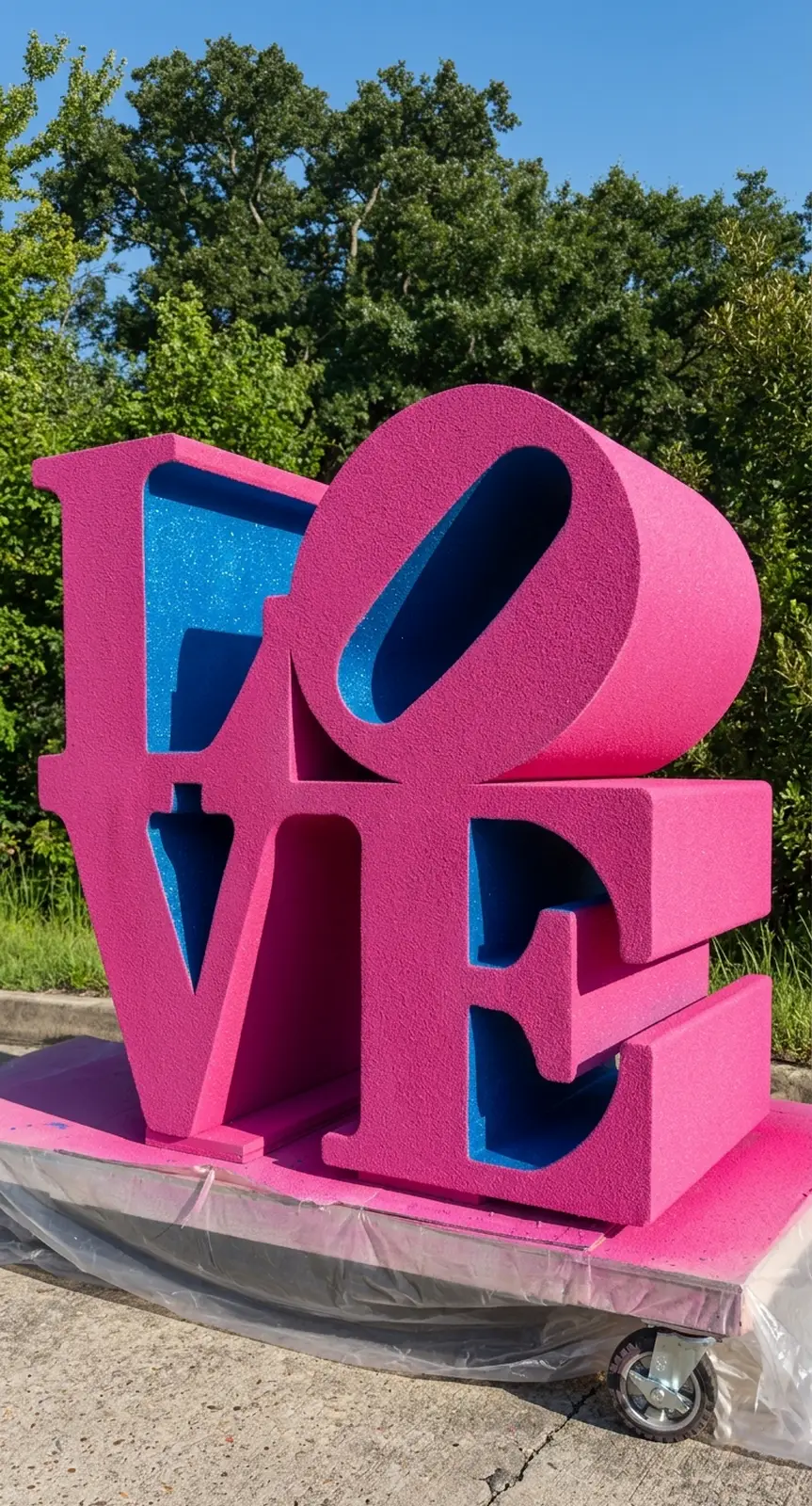
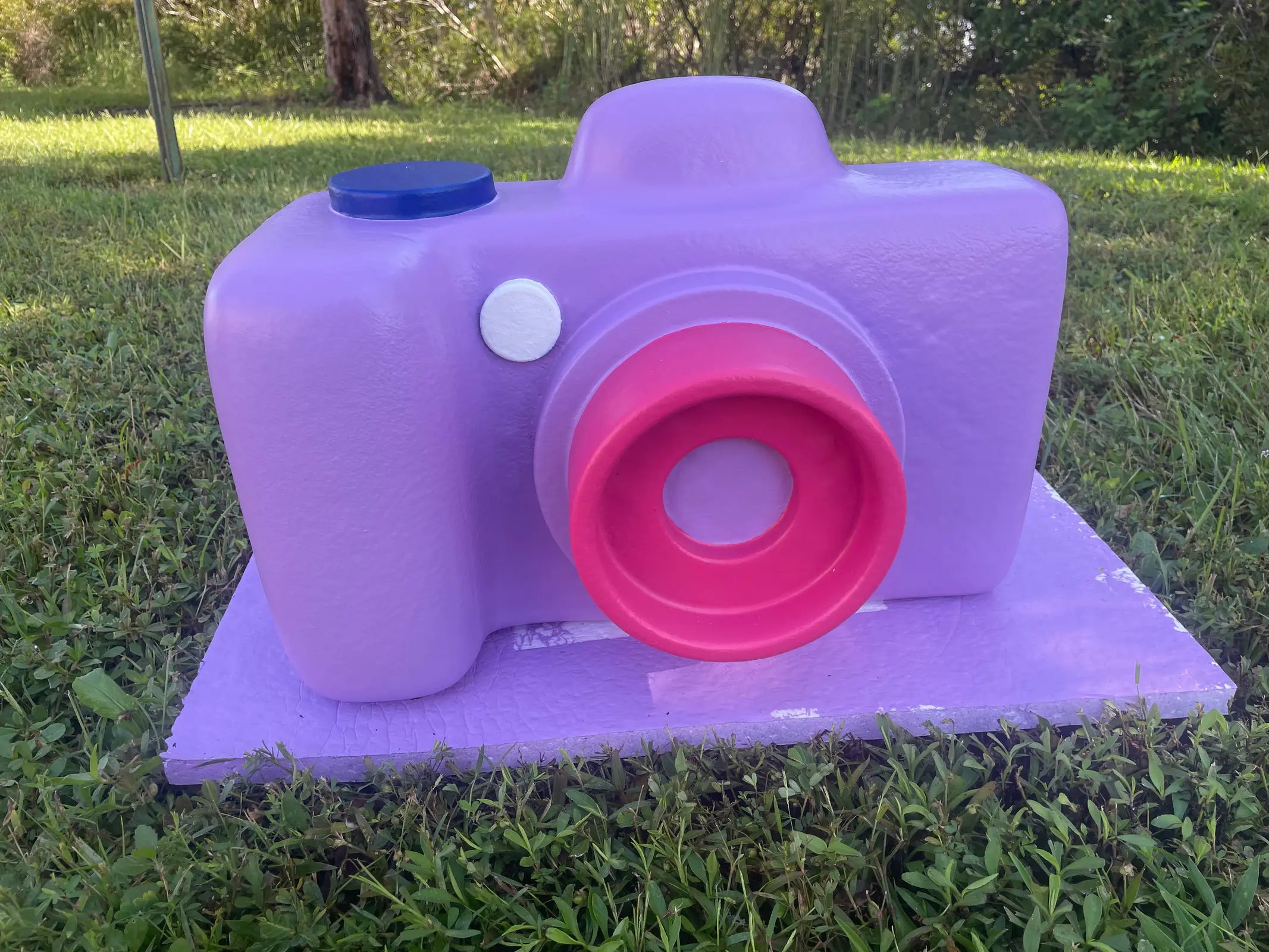
- Distinctly tactile surfaces. Social media has raised the bar for visual texture. A prop that looks interesting up close — the rough foam textures, painted details, aged finishes — generates a second type of content beyond the standard selfie. People photograph and film the details, and those close-up shots often perform better than wide shots.
Lighting: the nuance most brands get wrong
Props that look spectacular in person can photograph terribly if the lighting is wrong. Ideal photo-op lighting is soft and even: no harsh shadows across faces, no blown-out highlights on the sign surface. Many custom 3D props are designed with built-in LED elements or halo lighting to ensure flattering results regardless of the venue conditions. If you’re planning an evening event or an indoor activation with low ambient light, lighting integration in the prop design is a basic necessity.
Decorative arches and columns: building photo zones with a double duty
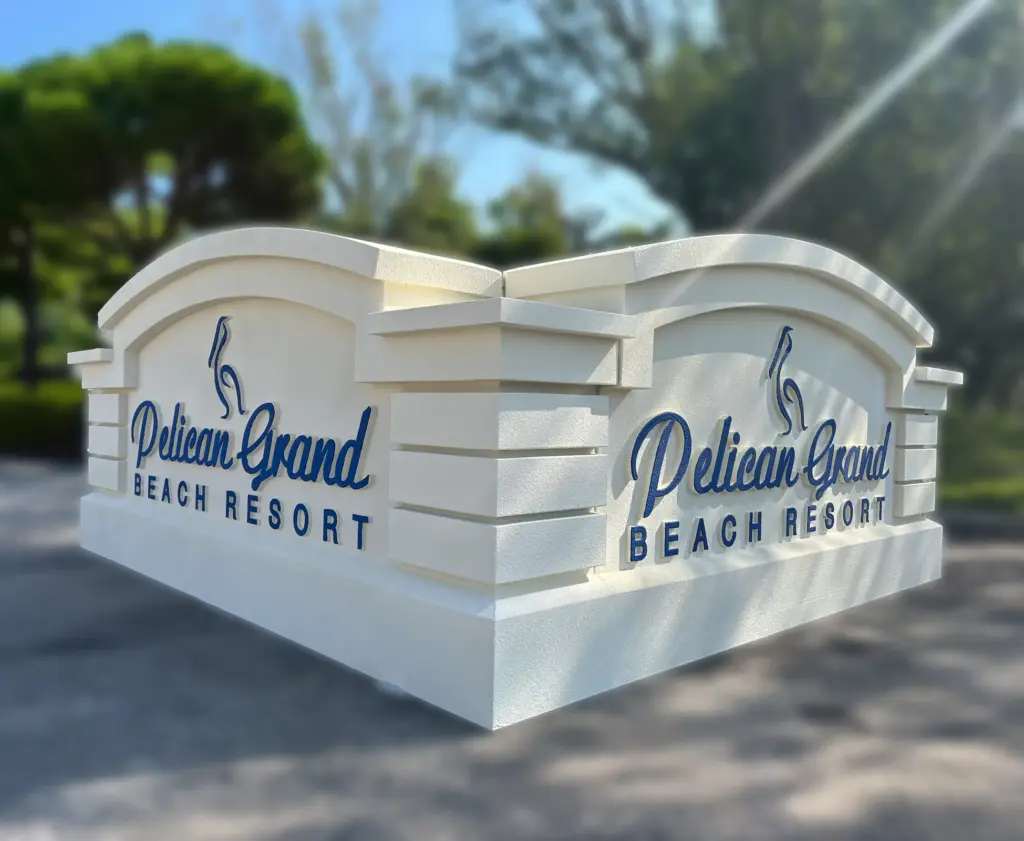
A single 3D sign is just a destination. A fully-fledged architectural photo zone with an arch, side columns, and possibly a branded backdrop is a different story. This combination transforms a corner of your event space into something guests specifically seek out, spend time with, and photograph multiple times from different angles.
Decorative arches have become a standard feature of modern wedding photo zones — but they work just as well at other events. Corporate parties, product launches, brand activations, and pop-up retail spaces all use arches because these elements are immediately recognized as a “stop here” signal. No signage is required, and no staff is needed to direct guests. This structure does all the work on its own.
The wedding arch crossover: why this format works in any event context
The arch for wedding settings has always been about framing a moment — the ceremony, the first kiss, the portrait. This instinct translates directly to brand events. The psychology is identical: walking through the arch or standing in front of it signals, “This moment is important.”
The difference between a wedding arch and a brand activation arch is the finish and messaging. At a corporate event, the arch might carry the company name across the crown, or repeat a campaign hashtag along the interior curve. At a product launch, it might be finished in the brand’s colors with product imagery integrated into the structure. The form is borrowed from a ceremony; the content is entirely yours.
Side columns complete the architectural composition. Two columns with an arch between them create a gateway — one of the oldest symbols of arrival and significance in architecture. For an event associated with a destination: guests walk toward it, stop at it, and take photos of each other in front of it. The brand captures this moment of pause.
Event decor fabrication: how custom 3D props actually get made
Understanding the production process helps you commission better work and set realistic timelines. Custom foam structures for events follow a defined sequence from concept to packaging, and each stage affects cost, production time, and final quality.
The process starts with a 3D digital model. Before a single piece of foam is cut, the design team creates the structure in CAD software, checking the proportions, structural integrity, and how the piece will look in photos from different angles. It’s at this stage that decisions about scale are made — and it’s worth insisting on a realistic rendering that includes a human figure so you can truly assess the effect.
EPS foam: the secret behind lightweight but monumental event props
Here’s what sets fast, affordable event prop production apart from slow, expensive alternatives: expanded polystyrene (EPS). It’s a material that lets fabricators create a six-foot logo in a matter of days, rather than weeks, ship it across the country without damage during transit, and install it with just two people and a hand truck instead of a construction crew.
EPS foam is shaped by CNC machines guided by the digital model, then refined by hand. The raw foam is lightweight and easy to cut precisely. What makes it viable for commercial events happens next: a hard polyurea coating is applied over the entire surface, creating a shell that’s impact-resistant and weather-tolerant. This coating provides the structure with sufficient strength for transportation, installation, and operation in all weather conditions and under frequent human contact.
After applying and sanding the hard coating, the team brings the sign to life with color. High-quality paint is applied in colors that match the brand’s exact specifications or the event’s theme.
Ready 3D props are delivered to the event place. In most cases, no special tools or installation crew are required. Often, the items are ready for installation — all you need is to open the box, remove the props, and place them in the proper location. Expanded polystyrene arches are shipped in flat-pack form and come with assembly instructions if needed.
Real examples of custom 3D signage that really inspire
The clearest argument for custom 3D props is the results brands have already achieved. Here are three examples that show the full range of possibilities.
- Google I/O conference. At this tech event, a life-size 3D version of the I/O logo was installed as the central photo op. The event’s hashtag was embedded into the sculpture, turning every photo into trackable content. This allowed the team to monitor in real time how effectively the installation was functioning as a generator of media content. For a tech-savvy audience, the message was clear: the brand understands how its guests actually behave.
- Pringles Playground (summer festival tour). A supersized Pringles can installation that functioned as both a photo op and an interactive music mixer. The exterior looked like a product-sized building; the interior was an experience. The result was a piece of event decor that people sought out, lined up for, and posted without any prompting. It worked because it gave guests something to do, not just something to stand in front of. On top of that, the shared content directly linked fun and active leisure with the brand’s image.
- The “Hello!” sign by Regency Centers at a shopping mall. A 3D sign in a public space, consisting of huge colorful letters, demonstrates another use case: humanizing corporate spaces. The sign had no product pitch. It just created a moment of warmth that people wanted to capture. The brand name on the base was enough — the sign served an identification function, creating an experience people wanted to share.
The through-line across all three examples: each installation gave guests a reason to stop, and it had nothing to do with a hard sell. The brand presence was embedded in the experience, not bolted onto it.
What you need to know before ordering 3D foam props
So, you already know which 3D installations will be the most popular with event guests. However, in addition to the aesthetic aspect, it’s important to keep the practical considerations in mind.
Before engaging a fabricator, prepare clear answers to these questions:
- What are the dimensions of the structure?
- What’s the surface the prop will stand or hang from?
- Will it be used once or toured to multiple events?
- Does the venue have load-in restrictions that affect size or weight?
Don’t dismiss these details as unnecessary formalities. These specs determine whether the project is feasible and whether the finished product will withstand the first event.
You also need to consider production timelines: this is the factor that catches most brands off guard. Standard custom foam structures for events require 2–4 weeks to manufacture after design approval. Add shipping, and a complex installation needs to be commissioned 6-8 weeks before the event date. Rushing this process will either cost more or lead to poorer results—neither of which is acceptable for an installation on which you’ve pinned such high promotional hopes.
Royal Foam Art Design has been producing architectural decor and custom foam structures for close to 25 years. The team works with designers, event planners, brand managers, and architects across commercial and residential projects. Whether you’re developing a concept for a one-time activation or building a prop kit that travels with your marketing program, the process begins with a discussion of what you truly need.
Recommended Articles